Dr.-Ing. Oliver De Candido

Technical Consultant @ dSPACE SE & Co. KG

30+ research projects supervised 20+ AI safety cohorts facilitated Summa cum laude Dr.-Ing. — TUM 2023 New Book: Machine Learning in Safety-Critical Applications

After growing up in Hong Kong and completing my GCE A-Levels at the German Swiss International School, I moved to Munich to study Electrical Engineering and Information Technology at the Technical University of Munich (TUM), earning my B.Sc. (2014), M.Sc. (2017), and Dr.-Ing. degree (2023) — the latter with summa cum laude. My doctoral research, conducted jointly at the Professur für Methoden der Signalverarbeitung (MSV) and AUDI AG, focused on building validation safety arguments for Machine Learning (ML)-based highly automated driving functions.

After my doctoral research, I joined neurocat GmbH as Senior Research Engineer and Artificial Intelligence (AI) Research Team Lead, where I led work on realistic image augmentations for perception model safety arguments. Since January 2025 I have been a Technical Consultant at dSPACE SE & Co. KG, helping teams design test strategies for ML-based Autonomous Driving (AD) and Advanced Driver Assistance Systems (ADAS) functions.

I care deeply about making AI systems safe and trustworthy — not just for today’s vehicles, but as a foundation for more capable future systems. If you’d like to discuss AI/ML safety, autonomous driving validation, or anything else in this space, I’d love to hear from you.

Education

Research

My main research interests lie in ML and AI, specifically working on methods to support safety arguments for safety-critical applications. Previously, I researched signal processing techniques for Multiple-Input Multiple-Output (MIMO) communication systems.

Publications: Google Scholar · mediaTUM  |  Dissertation: TUM mediaTUM  |  Code: GitHub

Peer Review

I have served as a reviewer for:

  • IEEE International Conference on Intelligent Transportation Systems (ITSC)
  • IEEE Intelligent Vehicles Symposium (IV)
  • IEEE Transactions on Intelligent Vehicles (T-IV)
  • ACM Journal on Autonomous Transportation Systems
  • I Can’t Believe It’s Not Better Workshop @ ICLR
  • I Can’t Believe It’s Not Better Workshop @ NeurIPS
Book cover: Machine Learning in Safety-Critical Applications

Machine Learning in Safety-Critical Applications

A comprehensive guide to applying ML models in safety-critical domains where failure has serious consequences. The book introduces methods and frameworks for building rigorous safety arguments for ML-based systems, bridging the gap between research and the engineering practices required in regulated industries such as autonomous driving. Co-authored with Dr.-Ing. M. Koller. Published by Springer Nature, 2026.

Validating Machine Learning-based Highly Automated Driving Functions by Diversity

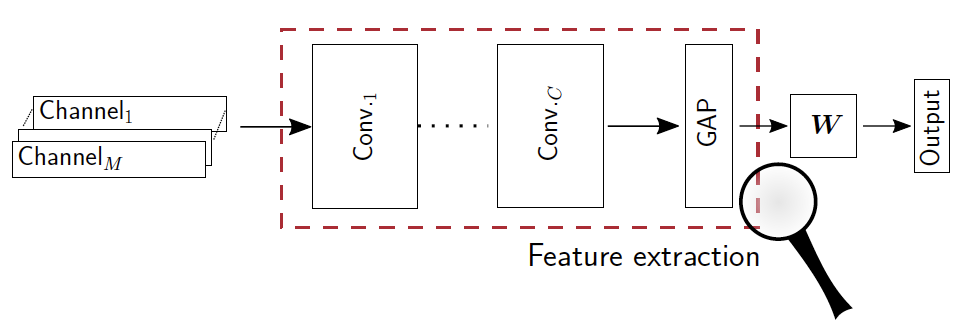
The main focus of my doctoral project was researching ML safety methods used to build validation safety arguments of ML-based safety-critical driving functions. I built safety arguments by validating various aspects of deep neural networks. In my research, I focused on the following methods: representation learning, self- and semi-supervised learning, clustering methods, interpretability methods, and the distributional shifts between public highway driving datasets. I primarily worked with time-series data on object lists.

© A. Rosebrock, CC BY-SA 4.0

Utilising Image Augmentations at neurocat

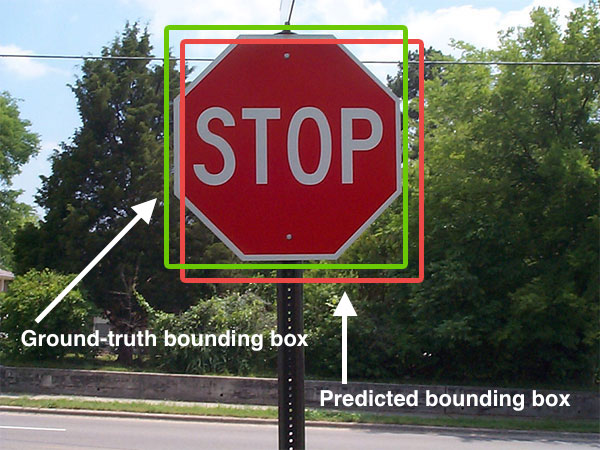
At neurocat, I worked with my team on using realistic image augmentations generated by aidkit to: (i) build safety arguments of perception models; or (ii) fine-tune perception models with augmentations to improve performance in specific operational design domains. We primarily worked with open-source object detection and semantic segmentation models and datasets, e.g., Faster-RCNN, RetinaNet, DeepLabV3+, or the ZOD dataset. We built robust reporting methods which could be used in safety arguments and found training strategies to improve models' performance in specific cases.

Machine Learning/Artificial Intelligence Safety

Besides my doctoral research topic, I am interested in ML/AI research. I have worked on various projects related to ML safety, e.g., using reinforcement learning in automated driving or detecting adversarial attacks in modern ML models. I am also interested in AI safety technical research.

Teaching

I was also a teaching assistant at MSV, working with two graduate level courses:

I completed both the foundation level certificate and the advanced level certificate for Teaching in Higher Education at Bavarian Universities. I took courses ranging from the theories of teaching and learning, through to advising and counselling students.

Whilst at MSV I supervised: 8 Master's Theses, 6 Bachelor's Theses, 6 Research Internships, and 7 Seminar Papers.

Facilitating

In my free time, I have found it rewarding and engaging to help facilitate (and participate in) various online courses related to AI/ML safety. Below are the courses I've facilitated with a link to the course for more information!

Contact

I'm always happy to talk about AI safety, autonomous driving, or research more broadly. The best way to reach me is via LinkedIn — though you're also welcome to drop me an email directly.